
Bedouins: The Native Israelis?
Every Thursday, OTZMA takes everyone on the program to an Education Day somewhere in the country. Most of these are in Jerusalem or Tel Aviv and have covered a range of issues such as Israeli politics, history, and religious information. But this week we went south to learn about social justice. Part of this day took us to a Bedouin Village. Now this is not the camel riding, tea drinking locale that Birthright and other Jewish programs often visit. Continued...
Bedouins of the Middle East have it pretty rough. Their plight is very similar to the saga of the Native American. Once they nomadically roamed through out the desert, now they live in shacks of which many can be seen along roadsides. Some of these are reservations created by Israel, but many are unrecognized villages. Places that the Israeli government refuses to acknowledge.
There are several reasons and problems because of all this. First of all I’ll talk about the recognized villages, the Israeli government has set aside land with running water and sewage treatment for seven Bedouin Villages. But when driving through these, one can see empty plots of land with hookups for water and electricity. The unused space is because Bedouins are tribal and territorial. Therefore only one tribe can live in an area and even if there is more room, another tribe will not move in the first tribe’s area. So there might be extra space and across the street are hundreds of people without water or sewage treatment, yet they will not move into another tribe’s space. Another issue is gender roles in the Bedouin community. In the past the women would gather everyday at the water hole where they talked with other women and connected. Their role was food preparation and keeping the home and children together. In the past they connect at the water hole, but today with out this space, Bedouin women do not even leave the home causing depression and isolation. Bedouin men today, do not tend to the animals outside, but travel far every day to factories to do boring numbing work such as watching bottles on a conveyer belt for cracks for eight hours a day.
Fortunately things are in place to change soon. The next generation is going to college, the women in fact more than the men, because they are unable to work in factories and need to seek work elsewhere. Hopefully with this influx of education from the next generation, they will be able to bring about change.
Sadder is the unrecognized village. There are around 45 Bedouin tribes in Israel. The government was willing to give some land to them, but not 45 different plots and so many tribes are living in the desert with nothing. OTZMA took us to one of these unrecognized villages where some of the people there spoke to us. Their situation really sucks. Borders between countries have ended their nomadic life style, so they must get used to having a village. There is no sewage treatment or new roads being built because no tribe wants any of these roads to go through their own village. So progress is at a stand still. Women are treated way worse here. Men can have more than one wife, and when they grow tried of one wife, they will often take another. Most of these women are smuggled across the border and because they are illegal they have no medical treatment or other help from the government and are totally at the whim of the men who married them.
Looking around at the makeshift village was difficult. All the homes where made out of tin siding and there was trash everywhere. Also drugs are a large problem for the Bedouins, because they are nomadic, they know the desert better than anyone else and therefore have taken over the drug trafficking trade.
There are a lot of issues that the Israel government has to focus on and the Bedouin situation is difficult, expensive and not life and death for the country and is therefore slipping through the cracks, so I thought it deserved a little recognition from my blog!
Bedouins of the Middle East have it pretty rough. Their plight is very similar to the saga of the Native American. Once they nomadically roamed through out the desert, now they live in shacks of which many can be seen along roadsides.
 Some of these are reservations created by Israel, but many are unrecognized villages. Places that the Israeli government refuses to acknowledge.
There are several reasons and problems because of all this. First of all I’ll talk about the recognized villages, the Israeli government has set aside land with running water and sewage treatment for seven Bedouin Villages. But when driving through these, one can see empty plots of land with hookups for water and electricity. The unused space is because Bedouins are tribal and territorial. Therefore only one tribe can live in an area and even if there is more room, another tribe will not move in the first tribe’s area. So there might be extra space and across the street are hundreds of people without water or sewage treatment, yet they will not move into another tribe’s space. Another issue is gender roles in the Bedouin community. In the past the women would gather everyday at the water hole where they talked with other women and connected. Their role was food preparation and keeping the home and children together. In the past they connect at the water hole, but today with out this space, Bedouin women do not even leave the home causing depression and isolation. Bedouin men today, do not tend to the animals outside, but travel far every day to factories to do boring numbing work such as watching bottles on a conveyer belt for cracks for eight hours a day.
Fortunately things are in place to change soon. The next generation is going to college, the women in fact more than the men, because they are unable to work in factories and need to seek work elsewhere. Hopefully with this influx of education from the next generation, they will be able to bring about change.
Sadder is the unrecognized village. There are around 45 Bedouin tribes in Israel. The government was willing to give some land to them, but not 45 different plots and so many tribes are living in the desert with nothing.
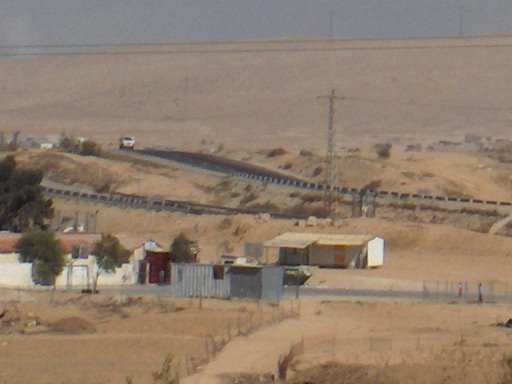 OTZMA took us to one of these unrecognized villages where some of the people there spoke to us. Their situation really sucks. Borders between countries have ended their nomadic life style, so they must get used to having a village. There is no sewage treatment or new roads being built because no tribe wants any of these roads to go through their own village. So progress is at a stand still. Women are treated way worse here. Men can have more than one wife, and when they grow tried of one wife, they will often take another. Most of these women are smuggled across the border and because they are illegal they have no medical treatment or other help from the government and are totally at the whim of the men who married them.
Looking around at the makeshift village was difficult. All the homes where made out of tin siding and there was trash everywhere. Also drugs are a large problem for the Bedouins, because they are nomadic, they know the desert better than anyone else and therefore have taken over the drug trafficking trade.
There are a lot of issues that the Israel government has to focus on and the Bedouin situation is difficult, expensive and not life and death for the country and is therefore slipping through the cracks, so I thought it deserved a little recognition from my blog!
posted by JessMauer at 3:54 PM
| 

.jpg)


0 Comments:
Post a Comment
<< Home